
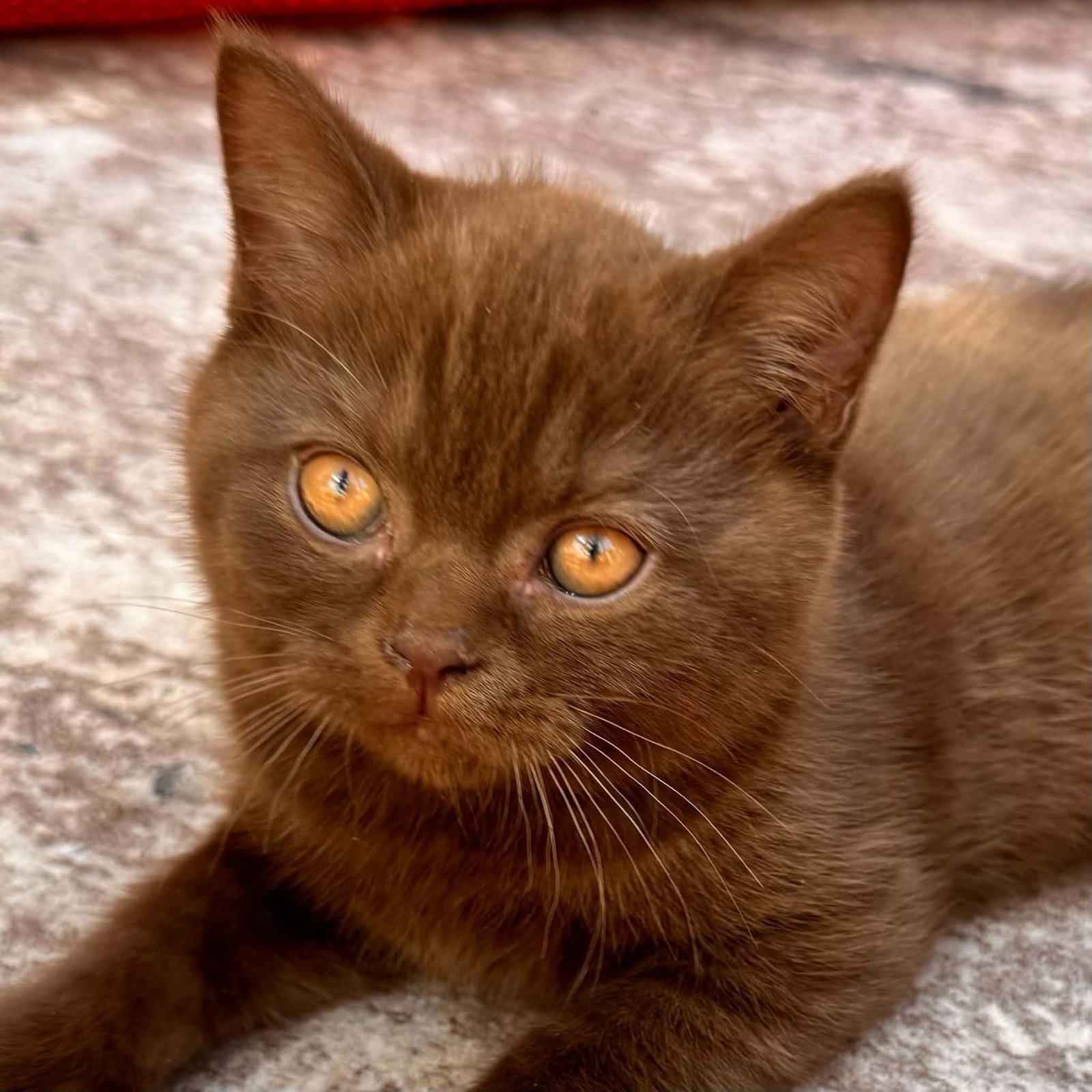
How much should a British Shorthair cost? It is the question I am asked most, and usually the first line of the email. So here is our answer before anything else: our kittens are £1,200, with a £300 deposit to reserve. That number is on this page, on our kitten information page, and in the first reply I send to anybody, because a price you have to ask for is a price that can move. Almost no British Shorthair breeder in the UK publishes what they charge, and I think that is a mistake. It wastes everybody’s time and leaves buyers comparing a properly bred kitten against a £350 advert with no idea why the two numbers are so far apart.
What a litter actually costs us
Most breeders talk about costs in the abstract. Here are the real numbers for a British Shorthair litter in 2026, so you can see for yourself where £1,200 goes.
| Before a single kitten exists | Cost |
|---|---|
| PKD1 DNA test at Langford Vets, per cat | £42.96 |
| Blood typing, added to the same submission | about £21 more |
| FIV and FeLV blood test before she goes to stud | £40–£100 |
| Stud fee | £500 |
| Driving her to stud and back | £80–£120 |
| Extra feeding through pregnancy and nursing | £80–£100 |
| GCCF litter registration | £50 with a prefix, £95 without |
The £500 stud fee is what we actually paid for Rosie’s mating, not an average. The Langford figures are their published 2025/26 cat genetics prices, including VAT. Both of Rosie’s parents-to-be had to be clear before we would put them together, and that is a bill you pay whatever the result — a test that comes back badly costs exactly the same as one that comes back well, and means there is no litter at all.
| Then, for every kitten | Cost |
|---|---|
| Full primary vaccination course | about £80 |
| Two vet health checks | on top of the vaccinations |
| Worming and flea treatment | £8–£12 |
| Microchip | £20–£30 at a vet |
| Royal Canin, weaning to sixteen weeks | the biggest food bill of our year |
| Kitten pack: food, litter, blanket, diet sheet | per kitten |
| Four weeks’ Petplan cover | free to us through the breeder scheme |
Microchipping is the one line where we genuinely save, because Paula is a certified implanter and does it here at home rather than at a surgery. It saves the fee, but that is not why we do it — the reason is in my piece on what to ask a breeder.
And that is if nothing goes wrong
An emergency out-of-hours caesarean in the UK now runs from £800 to £1,400. I have been through one. We paid it without hesitating and we would again, and we still lost two kittens that night. Nobody budgets for that, and every breeder has to be able to find that money at two in the morning without pausing to think about it.
I have written the whole economics of it out in more detail, with a Siamese example, in how much does a kitten cost on Siamese Cat Breeder. The figures are much the same whatever the breed.
The costs nobody sees
The list above is the part a buyer can picture. It is not the part that actually makes breeding expensive.
Rosie came to us in 2024. Her first litter arrived on 25 May 2026. That is two years of feeding, insuring, vaccinating and showing a cat before she produced a single kitten, and if her health testing had come back wrong, or if she had simply turned out not to be a good mother, there would have been no litter at all and no way to recover any of it. Every kitten you see advertised is carrying the cost of the years that came before it.
Then there is the part that does not appear on any invoice. Sitting up with a queen through the night because kittens rarely arrive at a sensible hour. Weighing every kitten every day for weeks and writing it down. The vet trip you make because something feels slightly off, and it turns out to be nothing, and you go anyway. Four months of the house being run around a litter of kittens.
And the kittens we keep. We held back Highway, the chocolate girl from Rosie’s litter, because she was the one we wanted for our own programme, which means she is not for sale, and the cost of raising her sits with us. Every serious breeder does this, and none of it comes back.
None of that is a complaint. It is a hobby we love and we would do it anyway. But it is the honest answer to “why is a kitten £1,200 when my neighbour’s cat had kittens for nothing?” The neighbour’s cat had an accident. This is a plan, and plans cost money.
Why we do not charge more for a rare colour
Plenty of breeders do, and I understand the logic — rarer colours are in higher demand and shorter supply. We do not, and it is a deliberate decision.
Colour costs us nothing extra. A chocolate kitten in a litter has not eaten more, cost more to vaccinate or taken more of our time than its blue brother. Charging £300 more for it would be charging for scarcity, not for work. Worse, it pushes buyers towards choosing a colour over choosing a kitten, and in my experience the colour is the thing owners stop noticing within a fortnight, while the temperament is the thing they live with for fifteen years.
If you want the full picture of which colours exist and how they are recognised, the British Shorthair colours guide on The British Shorthair Cat (the breed site I write) covers every variety with its correct eye colour.
On this page
- What a well-bred British Shorthair kitten typically costs
- What you are actually paying for
- The hidden cost of a cheap kitten
- The ongoing cost of ownership
- Why two British Shorthair kittens can differ so much in price
- What I would never skimp on, and what I would not pay extra for
- What I’ve learned about price
- Is a British Shorthair worth the money?
- Frequently asked questions
What a well-bred British Shorthair kitten typically costs
Across the UK, a health-tested, GCCF-registered British Shorthair kitten from a careful breeder generally runs from around £900 to £1,500, with rarer colours and show lines at the top of that. Ours sit at £1,200 (in the middle) and we charge the same for every kitten in a litter whatever its colour. What you should be suspicious of is the bottom of the market. A “British Shorthair” at £300 or £400 on a classifieds site is not a cheaper version of the same thing; it is usually a different thing entirely. As a British Shorthair judge, I can tell you that a great many cats sold under that name would not be recognised as British Shorthairs on my table.
For where the breed sits among popular UK cats and how colours affect demand, see the British Shorthair colours guide.
What you are actually paying for

A responsible breeder is not making easy money. The price reflects real costs incurred long before a kitten is ready to leave:
- Health testing of the breeding cats. For Rosie’s litter that meant PKD1 DNA testing at Langford Vets for both parents, and blood typing both cats before the mating. We do not heart scan, and I explain honestly why rather than charging you for a test that would not tell you what you think it does.
- Stud fees and the cost of keeping quality breeding cats.
- Quality nutrition for the queen and kittens.
- Vaccinations, vet health checks and worming.
- Microchipping (a legal requirement in England since June 2024).
- GCCF registration and pedigree paperwork.
- The breeder’s time — weeks of round-the-clock care and socialisation.
The hidden cost of a cheap kitten
A kitten bred without health testing or proper care can carry inherited disease and poor socialisation. The few hundred pounds ‘saved’ can be wiped out by a single vet bill, and no amount of money fixes a nervous, unwell start in life. When you buy from a careful breeder you are paying to avoid those costs, not just for the kitten itself.
The ongoing cost of ownership
The purchase price is only the start. Budget realistically for the life of the cat:
- Insurance, or a savings buffer for vet care.
- Quality food.
- Annual vaccinations and check-ups.
- Neutering, if not already done.
- Litter, scratching posts, beds and toys.
A British Shorthair is a long-lived breed, often well into its teens, so a kitten is a commitment of fifteen years or more. Choose well and that is a very long time to be glad you did.
Why two British Shorthair kittens can differ so much in price
Buyers are often surprised that two kittens from the same breed sit hundreds of pounds apart. It usually comes down to a handful of honest factors: the colour (most breeders charge more for rarer colours such as cinnamon, fawn and golden. We do not), whether the kitten is sold as a pet or with breeding or show potential, the depth of health testing behind the parents, and the breeder’s own costs in that part of the country. None of that is a trick. It is the difference between a kitten bred carefully and one bred cheaply.
What I would never skimp on, and what I would not pay extra for
As both a breeder and a buyer, I would never economise on health testing, proper vaccination and a kitten that has stayed until its vaccinations are finished and it has had around three more weeks to settle, for us that is usually fourteen to sixteen weeks. Those are the things that protect you for the next fifteen years. Equally, I would not pay a premium for a fashionable colour at the expense of temperament, or for ‘papers’ that turn out not to be GCCF registration at all. Spend where it protects the cat; do not spend where it only flatters the advert.
What I’ve learned about price
Money is the part buyers worry about most and, honestly, the part that matters least once the cat is home. A few hard-won observations.
- The cheapest kittens cost the most. The buyers who came to me upset about vet bills almost always started with a bargain kitten from an untested litter.
- Nobody ever regrets paying for health testing. It is a few hundred pounds against the breed’s known risks — kidney disease, heart disease, blood-type clashes. That is cheap insurance.
- A fair breeder can explain every pound. Ask what the price covers. If the answer is vague, that tells you how the kitten was raised.
- Budget for the cat, not just the kitten. Fifteen-plus years of food, insurance and care dwarfs the purchase price. Plan for the lifetime, not the day.
Is a British Shorthair worth the money?
I am asked this constantly, and I understand why. But it is the wrong question, and answering the wrong question is how people end up with the wrong cat.
I am not going to tell you what a cat is worth. The real question here is whether you can give one the next fifteen years.
That is what you are actually deciding, and it has very little to do with £1,200 against £400. It is whether somebody is home enough of the time. Whether a £600 vet bill in year eight would be an inconvenience or a crisis. Whether everyone you live with wants a cat, or just tolerates the idea. And whether you will still want this one when it is thirteen, sleeping most of the day, and no longer the kitten in the photographs.
If the answer to all of that is yes, then the difference between a carefully bred, health-tested kitten and a cheap one comes to a few pounds a month across the cat’s life, and it buys a far better chance of a healthy, settled animal and far fewer frightening phone calls to the vet. The cats I see still thriving in their late teens are almost always the ones whose owners chose the breeder carefully and were in no hurry.
If the answer is no, or not yet, then there is no price that makes it right. And I would far rather say that to you now than take your deposit.
If you have read all of that and you are still here, the next thing to read is buying a British Shorthair kitten from us in Hampshire. It explains how our kitten list works, why the honest answer most weeks is that we have nothing available, and why collection is from us here in Fareham.
Free download — no sign-up needed
Print it out and take it with you. Budgeting for a kitten? Our checklist and diet sheet help you plan.
More free guides: Diet & Feeding Sheet · Weight & Growth Tracker
Frequently asked questions
How much is a British Shorthair kitten in the UK?
Ours are £1,200 with a £300 deposit. Across the UK a health-tested, GCCF-registered kitten from a careful breeder generally runs from about £900 to £1,500. Be very cautious of anything far below that.
Why are British Shorthairs more expensive than a moggy?
You are paying for health testing, registration, vaccinations, microchipping, quality nutrition and the breeder’s time — none of which apply to an unplanned litter.
Are rarer colours more expensive?
Across the market, usually yes — rarer colours such as cinnamon, fawn and golden are in higher demand and lower supply, so they sit at the upper end of the range. We charge the same for every kitten in the litter whatever its colour, because a cinnamon kitten has not cost us a penny more to raise than its blue brother.
Is a more expensive kitten always better?
No. A very high price with pressure to pay quickly can itself be a scam tactic. Judge the breeder on health testing, registration and whether you can visit, not on price alone.
What ongoing costs should I budget for?
Insurance or a vet savings buffer, quality food, annual vaccinations, neutering and the usual equipment. Plan for a fifteen-year-plus commitment.
Ours are £1,200, and you have just read where every pound of it goes. If you want to see what that actually buys, the kitten information page lists everything that walks out of the door with a kitten, and available kittens shows what we have now. If a price you have been quoted elsewhere is a long way under it, ask that breeder the same questions I have answered here.