

The call usually comes about a fortnight after collection day, and it always starts the same way. The kitten was perfect. Used the tray from the first hour, no accidents, no fuss. And then this morning there was a puddle behind the sofa.
The owner has already decided what it means. The kitten is being naughty, or it is spiteful, or it has decided it does not like them. It is almost never any of those things, and after more than twenty years of breeding and a certification in feline behaviour I can tell you that the answer is usually sitting in plain sight in the room. Let me show you where to look.
On this page
- A confession, and the best evidence I have
- It is almost never the kitten
- We changed the litter, and a kitten voted with his feet
- The checklist, in the order that actually fixes it
- When it is not behaviour at all
- Never punish it, and never carry the kitten to the mess
- How long it takes to come right
- What we do here so you inherit less of this
- Frequently asked questions
A confession, and the best evidence I have
We once shut a kitten in the bathroom. Not deliberately. The door swung to while we were getting ready, and off we went shopping for a couple of hours with one of Rosie’s kittens sitting quietly on the bath mat.
We only found out because Rosie told us. She was waiting when we got in, and she was very clear about it.
The part that still impresses me is that the kitten had held on. Two hours, no tray in the room, and it waited until the door opened before trotting off to use one properly.
I keep coming back to that, because it is the single best answer to the question people actually ring me with. A kitten young enough to be shut in a bathroom by accident would rather be uncomfortable for two hours than soil the room it is in. That is not an animal looking for somewhere to make a point. Every kitten I have bred would rather use a tray. When one does not, something has got in the way.
It is almost never the kitten
Cats do not toilet outside the tray out of spite. It is worth saying flatly, because the spite theory is the single most common reason a fixable problem does not get fixed — you cannot solve a problem you have misdiagnosed as a personality flaw.
What is actually happening falls into three buckets, and in this order of likelihood: something about the tray has changed, something about the household has changed, or the kitten is unwell. The first two are yours to fix in an afternoon. The third needs a vet, and I will come to how you tell.
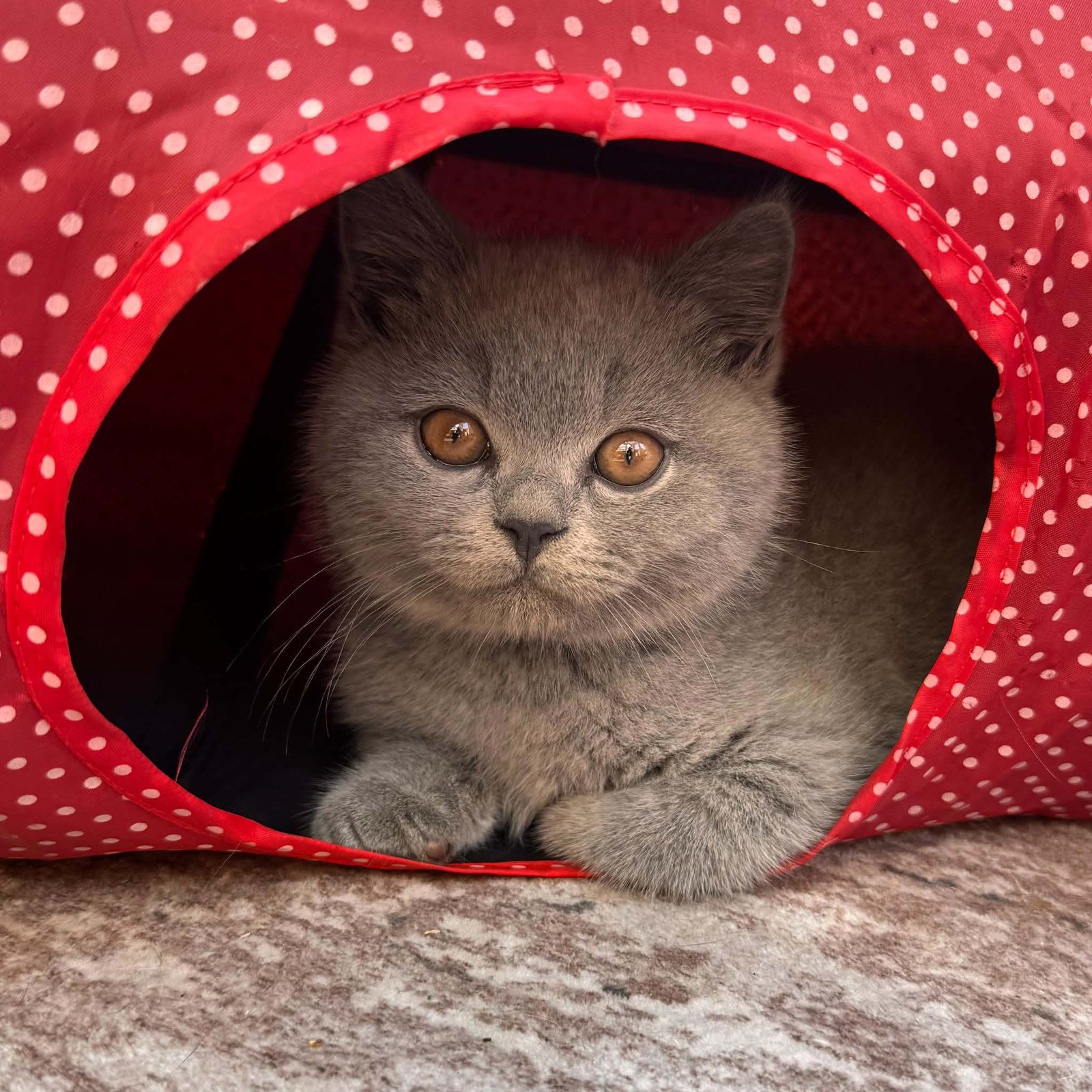
The thing to hold on to is that a kitten arriving in your house has just had everything changed at once. New floor, new smells, new noises, new people, new food, new tray, new litter, and no mother. It is remarkable that most of them manage the tray at all. The wonder is not that some of them wobble in week two. It is that they do not all wobble in hour one.
We changed the litter, and a kitten voted with his feet
This one is ours, and it is recent.
We changed cat litter brand. Not for any grand reason — the sort of swap you make without thinking about it. One of the kittens took a look at the new stuff and decided he was not having it, and promptly stopped using the tray.
We put the old litter back. He used the tray again immediately, that same day, as though nothing had happened.
Then we did it properly. A little of the new litter mixed into the old, then a bit more the following week, then more again, until the tray was entirely the new brand and he had never noticed the difference. No training, no telling off, no cleaning products, no drama. We had simply changed something underfoot without asking him.
That is the whole article in one story, really. He was not being difficult. He was being consulted, and the answer was no.
The checklist, in the order that actually fixes it
Work down this list in order. In my experience the answer is in the first four about nine times out of ten.
- Have you changed the litter? Brand, type, texture, scent, anything. Go back to what the kitten was using and reintroduce the new one gradually over two or three weeks, mixed in. This is the commonest cause by a distance, and it is why we send you home with a bag of the litter your kitten already uses.
- How many trays are there? One per cat plus a spare, in different rooms. Two cats need three trays. A kitten queueing behind a resident cat will find somewhere else to go, and the resident cat will not always tell you it is guarding the tray.
- Where are they? Not next to the food and water, not next to the washing machine, not in a corner the kitten has to cross the whole house to reach, and not somewhere a dog or a toddler can reach it. A cat wants to see what is coming while it is vulnerable.
- How deep is the litter? Two or three inches. Cats dig. A thin scrape over a plastic base feels wrong and it does not cover anything.
- Is it covered, and does it have a flap? Hoods trap smell for the cat, not just for you, and a flap means a kitten has to push its way in blind. Take the lid off and see what happens.
- How often is it cleaned, and with what? Solids out twice a day, full change and wash weekly. Never clean it with anything containing ammonia or strong disinfectant — you are washing it in a smell that reads as another cat.
- Have you cleaned the accident properly? An enzymatic cleaner from a pet shop, not a household cleaner. If the kitten can still smell it, it will read that spot as the correct place to go.
- What has changed in the house? A visitor, a new cat next door at the window, building work, a holiday, furniture moved, a new job with different hours. Cats are conservatives.
If you have a resident cat, add one more question: are the two of them actually getting on? Tray trouble is one of the first ways a kitten tells you an introduction has gone too fast. I have written a full method for that in my guide to introducing a kitten to an older cat.
When it is not behaviour at all
This is the part of the article I would rather you read than the rest of it.
Some tray problems are medical, and one of them is a genuine emergency. Ring your vet the same day if you see any of these:
- Straining in the tray and producing little or nothing. In a male cat this can be a urinary blockage, and a blocked cat is an emergency measured in hours, not days.
- Blood in the urine, or a pink tinge in the litter.
- Crying or yowling in the tray, or bolting out of it immediately afterwards. A cat that hurts when it goes will start to blame the tray and avoid it.
- Going very frequently, in small amounts, all over the house.
- Diarrhoea, or nothing at all for more than a day or two. A constipated kitten will squat, fail, and try somewhere else.
A kitten that used the tray perfectly and then stopped abruptly, with no change anywhere in the house, is a vet visit before it is a behaviour problem. Get that ruled out first and everything else becomes easier to think about.
Free download — no sign-up needed
Our kitten buyer checklist covers the setup we recommend for the first week, including trays, and it is free with no sign-up.
More free guides: Diet & Feeding Sheet · Weight & Growth Tracker
Never punish it, and never carry the kitten to the mess
The old advice about rubbing a cat nose in it is not merely useless, it is actively counterproductive, and I still hear it often enough to be worth saying out loud.
A cat cannot connect a telling-off with something it did twenty minutes ago. What it learns instead is that you are unpredictable and that going to the toilet near you is dangerous. So it goes further away, more secretly, behind the sofa where you will not find it for two days. You have not taught it where to go. You have taught it to hide.
Clean it up without comment, work down the checklist, and let the kitten get it right. That is the whole method.
How long it takes to come right
Faster than people expect, when the cause is found.
A litter change reversed is usually the same day, as ours was. A tray moved to a better spot is a day or two. A properly cleaned accident spot stops attracting repeat visits within a week. A household upset — builders, a new baby, a cat next door — takes as long as the upset takes, and the trays are the last thing to settle, not the first.
The only cases that drag on are the ones where nobody looked for a cause, or where a medical problem was treated as naughtiness for a fortnight. If you are two weeks in and getting nowhere, ring the breeder before you ring anyone else. Any breeder worth buying from would far rather have the phone call.
What we do here so you inherit less of this
British Shorthair kittens are remarkably easy to wean and litter train. Ours take to a tray far quicker than any Siamese or Oriental I have raised, almost as though they work it out for themselves. I suspect the truth is that Rosie teaches them. She is certainly better at this than we are at doors.
Our kittens are raised underfoot in the house rather than in a pen, with trays they can always reach and never have to queue for, and they go home at fourteen to sixteen weeks — long enough that the habit is genuinely established rather than merely started. They leave with a bag of the same litter they have used all their lives, which is the single most useful thing in the kitten pack for exactly the reason this article exists. Everything else in that bag is listed on our kitten information page.
And if yours does have a wobble, ring us. We would always rather you rang early than sat worrying, and there is a decent chance we have already made the same mistake ourselves.
Frequently asked questions
How many litter trays does one kitten need?
Two. The rule is one per cat plus a spare, in different rooms, and it applies just as much to a single kitten in a large house. A kitten that cannot reach a tray quickly will use the nearest soft thing instead.
My kitten uses the tray for urine but not for faeces. Why?
Usually the tray is not clean enough for both, or there is only one tray. Many cats will not do both in the same box. Add a second tray in a different room and the problem often disappears overnight.
Can I change to a different litter?
Yes, but slowly. Mix a small amount of the new litter into the old, increase it over two or three weeks, and stop if the kitten hesitates. We learned this one the hard way with a kitten who simply declined.
Should I use a covered tray?
Not while there is a problem. Hoods hold smell in and a flap makes a kitten commit blind to a small dark box. Once everything is settled, if you prefer a hood, add it back and watch what happens for a week.
The kitten keeps going in the same spot. How do I stop it?
Clean it with an enzymatic pet cleaner rather than a household one, because household cleaners leave the scent marker in place. Then make the spot less attractive and the tray more attractive: put a tray there temporarily, and move it a few inches a day once it is being used.
Is a British Shorthair harder to litter train than other breeds?
The opposite, in my experience. They are the easiest kittens to train that I have raised, and I have raised Siamese and Orientals for more than twenty years. If yours is struggling, something in the environment is the cause, not the breed.