
Health & Genetics
What we test for, what we don’t, and (more importantly) why. Some of it is good news. Some of it is a breeder telling you honestly where the science runs out.
Straight answers, not sales talk.
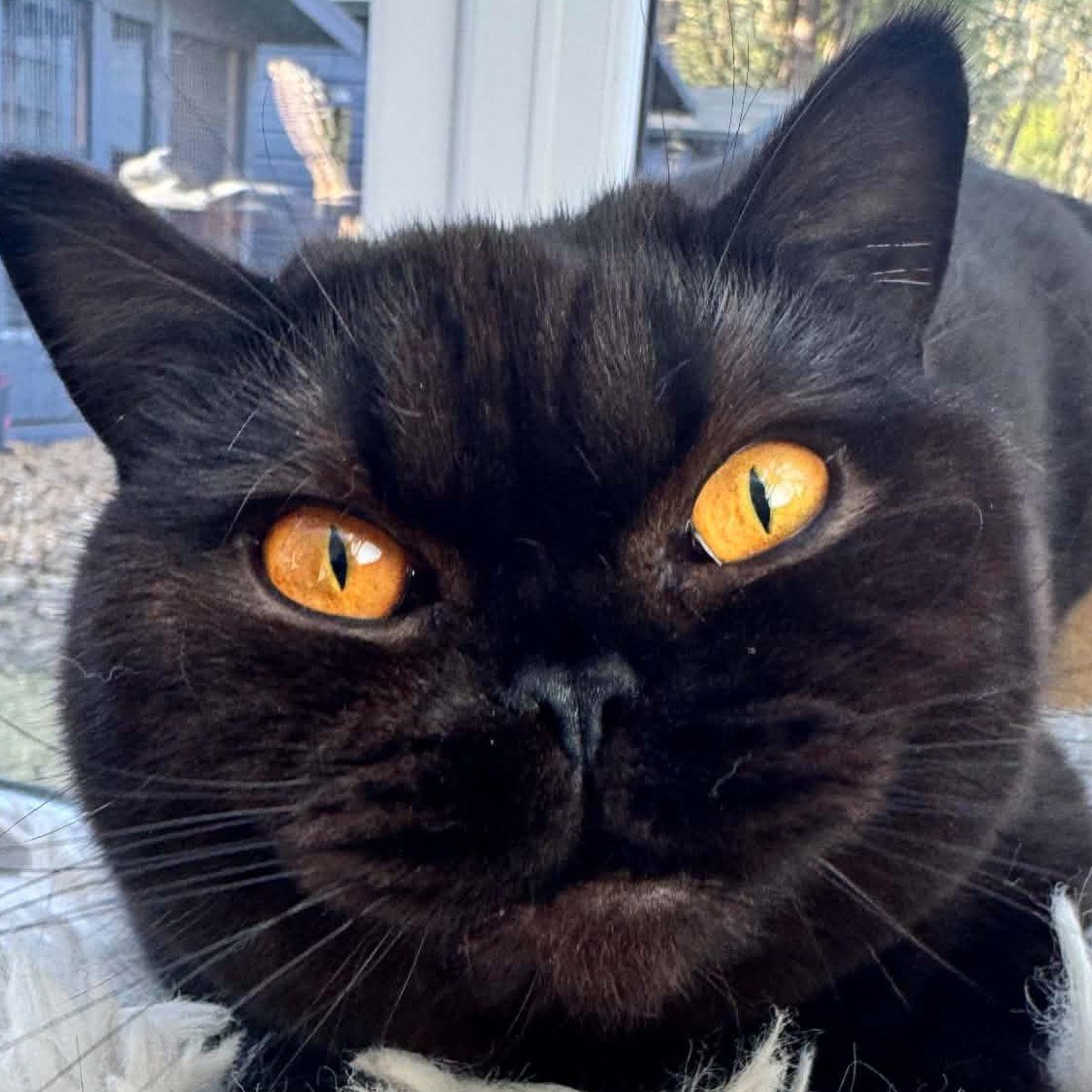
Health testing is the first decision in every pairing we make, not something we tack on afterwards.
If you want to see any certificate mentioned on this page, just ask. We will email it over before you commit to anything.
Polycystic Kidney Disease (PKD)
Our cats are clear, and they will stay that way.
PKD causes fluid-filled cysts to form in the kidneys. They grow slowly over years and eventually stop the kidneys working properly. It was once common in British Shorthairs and it is a genuinely serious disease.
The good news is that PKD is caused by a single known gene, and there is a reliable DNA test for it. That makes it one of the few things in cat breeding where you can get a real answer rather than an educated guess.
Where our cats stand:
- Rosie (RAYANSHEL WHOLE-LOTTA-ROSIE), dam of our 2026 litter — PKD1 Normal, DNA tested at Langford Vets, University of Bristol, 11 August 2026
- Maverick (GrCh HENBRITS TOPGUN MAVERICK), sire of our 2026 litter — PKD1 Normal, DNA tested 21 September 2023
Because both parents are clear, every kitten in that litter is PKD1 Normal by parentage. That is not a probability or a reassurance. it is a genetic certainty. A kitten can only inherit PKD if a parent carries it, and neither parent does. The status holds for life and will not change as the cat ages.
Highway, the chocolate girl we are keeping from Rosie’s litter, carries that same clear-by-parentage status, so our next generation starts from a clear line as well.
Our policy, going forward: every cat we breed from will be either DNA tested PKD clear, or clear by parentage from two tested-clear parents, with the paperwork to prove it. That applies to our own cats and to any stud we use. We will not breed from a cat whose PKD status we cannot document.
Blood typing
Not a health problem — just one of the things we make sure we know before we plan a mating.
British Shorthairs have a high proportion of blood type B, so blood group is something a breeder needs to know rather than guess at. Certain type combinations need managing at birth; knowing both cats’ types in advance means the question is settled long before any kittens arrive.
We blood type our cats, so every pairing we make is a known quantity rather than a hope. Rosie and Maverick are both type B, so this litter was entirely straightforward.
We will also tell you your kitten’s blood type when you collect, and we would suggest noting it on your vet records. It makes no difference to your cat day to day, but it is genuinely useful information if they ever need a transfusion, and most owners have no idea what their cat’s blood type is.
Hypertrophic Cardiomyopathy (HCM)
We do not heart scan our cats, and we would rather explain why than pretend otherwise.
HCM is a thickening of the heart muscle. It is the most serious health concern in the breed and we take it seriously. But the honest position is more complicated than most breeder websites make it sound, so here it is in full.
There is no DNA test for HCM in British Shorthairs
You may see British Shorthair kittens advertised as being from “HCM DNA tested” parents. The DNA tests that exist are for specific mutations found in Maine Coons and in Ragdolls. Those mutations have been studied in British Shorthairs and have not been shown to cause the disease in this breed. A clear result on one of those tests tells you the cat does not carry a Maine Coon mutation. It tells you nothing useful about a British Shorthair’s heart.
A scan is a snapshot, not a clearance
An ultrasound tells you how a heart looked on the day it was scanned. It does not tell you what will happen later. HCM in this breed is usually late-onset, so a cat scanned clear at two can still develop it at six. And because the inheritance is not understood, a parent’s scan result is a poor predictor of what that cat passes on to its kittens.
The GCCF’s own breeding policy says the same thing. From the British Shorthair Breed Advisory Committee’s Breeding Policy:
“Whilst this may be due to an inherited gene defect, as yet the defective gene has not been identified in this breed… at the moment testing in the British is limited to scanning with ultrasound, which can be unpleasant for the animal and expensive. Amongst British Breeders in Europe, annual HCM tests have become routine, but it has not yet become custom and practice for British Breeders here in the UK. Our current recommendation is that any breeder with reason to suspect an inherited HCM condition in any of their cats, should seek a scan and if the animal is affected remove him or her from the breeding population. Any progeny should also be scanned and monitored.”
That is the position we follow, and it is the GCCF’s recommendation rather than our own invention.
So what do we actually do?
We know these cats’ families. We breed from established lines with a known history and good longevity, and we ask about heart problems before we use a stud. We do not breed from any line with a known HCM problem, and we would not knowingly place a kitten from one.
If we ever had reason to suspect HCM in one of our cats (a murmur, a suspicious death in the line, anything at all) that cat would be scanned, and if affected would come straight out of our breeding programme, along with monitoring of its progeny. That is exactly what the GCCF policy asks for.
And if that ever happened, the people who bought kittens from that line would hear it from us.
Directly, and quickly.
What we will not do is hand you a scan certificate that looks reassuring while guaranteeing nothing. No breeder can promise you a kitten will never develop HCM. Any breeder who implies otherwise is either misinformed or hoping you are.
The contrast with PKD is the whole point. PKD has a real test, so we use it and can give you a definite answer. HCM does not, so we tell you that honestly instead of selling you false comfort.
That is our health position in full, and it is the part of this site I would most like you to read twice. Everything else (price, deposit, what comes home in the bag, when a kitten is ready to leave) is set out on the kitten information page.