
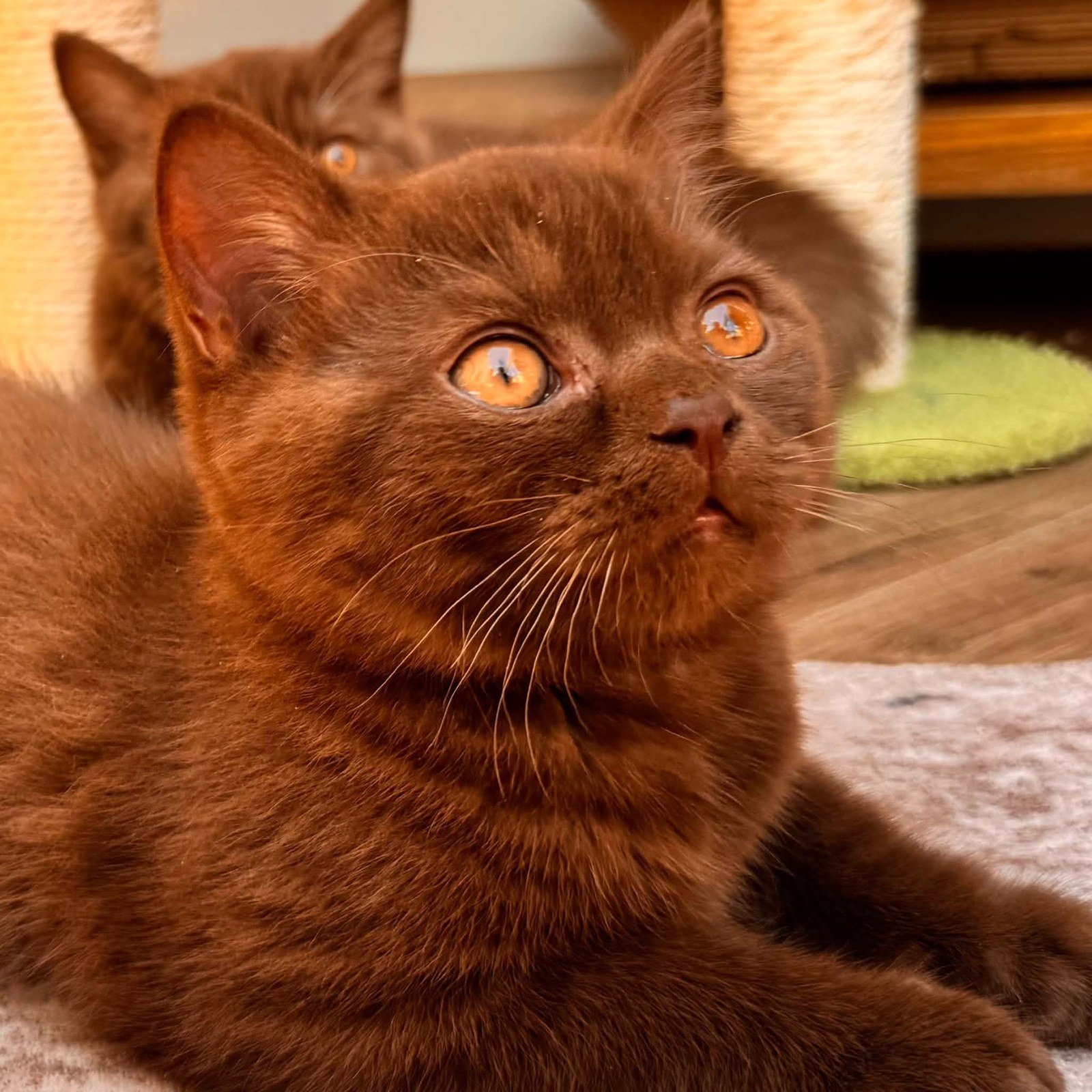
Collection day is a strange one for a breeder. You have spent four months getting a kitten ready to leave, and then it does. What we can control is that nothing about the handover is a surprise, so here is exactly what goes out of the door with an EzBritz kitten, and why each thing is in the bag.
The paperwork
- GCCF registration on the non-active register, with the registration slip in your name.
- The full pedigree, not a photocopy of the first two generations. You should be able to see where your kitten comes from.
- Copies of both parents’ health test certificates. For this litter that means Rosie and Maverick’s PKD1 DNA results from Langford Vets at the University of Bristol, and their blood types.
- A written contract, including the neutering clause and our indoor-only condition.
- The vaccination card, signed by our vet, showing both vaccinations and both health checks.
We hand the paperwork over in person and talk you through it rather than putting it in an envelope. If you want to see any of it before you commit to a kitten, ask. We will email it over. Our full testing position is on the health and genetics page, including the honest explanation of why we do not heart scan.
The health side
Every kitten leaves fully vaccinated, with the primary course complete, not partway through it. They have had two health checks with our vet, they are wormed and flea treated and up to date on both.
Microchipping is done here at home by Paula, who is a certified microchip implanter. Chipping has been a legal requirement in England since June 2024, and most kittens get it done at the vet during an appointment they already find stressful. Ours is done at the kitchen table by somebody the kitten has known since it was born. It takes a few seconds and they barely notice.
You also go home with four weeks of free Petplan insurance. We set the policy up before collection, so cover starts the day the kitten arrives with you rather than whenever you get round to it. We ask that your own vet sees the kitten within the first few days, partly for peace of mind and partly because it starts the relationship off.
The kitten pack, and why each thing is in it
The pack is not a gift bag. Every item in it is there to stop something going wrong in the first week.
- Royal Canin kitten food, wet and dry — the same food they have been eating here. A kitten coping with a new house, new smells and new people does not also need a new diet. If you want to change food later, do it gradually over a fortnight.
- Paper pellet litter, the same type they are used to. Litter tray problems in week one are almost always about an unfamiliar substrate or a badly placed tray, not the kitten.
- A blanket that smells of home — of mum and of the litter. It is the single most useful thing in the bag. Put it in wherever they sleep for the first few nights.
- A written diet sheet with quantities and timings, so nobody has to remember what we said on the doorstep.
- A care guide covering the first few weeks, what is normal, and what is not.
If you want to have everything else ready before collection day, the kit guides on CattyLicious cover what a new kitten actually needs, and, just as usefully, what it does not.
I say that with some feeling. In more than twenty years I have bought a great many toys that were sniffed once, admired briefly and then ignored for ever, and I have watched the cats spend the entire afternoon in the cardboard box the toys arrived in. Buy less than you think you need. The box is free.
How old they are when they go
A kitten leaves us once its full primary vaccination course is finished and it has had around three more weeks to settle afterwards, whichever falls later. In practice that usually means fourteen to sixteen weeks. Never before thirteen. That is the GCCF minimum and we do not make exceptions.
That is later than some breeders manage and it is deliberate. Those extra weeks with mum and littermates are where a lot of the confidence comes from. We are not willing to trade that for a faster handover.
Reserving, and what happens in between
Our kittens are £1,200. A £300 deposit reserves your kitten and the balance is payable on collection by bank transfer. The deposit is non-refundable if you change your mind, and refunded in full if we withdraw a kitten for any health reason.
Once the deposit is in, we send photo and video updates as they grow. You are welcome to visit by appointment once the kittens are old enough for visitors. We would far rather you came and met them, and met mum, than committed to a kitten you had only seen in photographs.
Collection is in person, from us in Fareham, Hampshire, always. It matters to us that we meet the people our kittens are going home with. For the full reservation process and our FAQs, see the kitten information page.
Breeding, and why the answer is usually no
Kittens are registered on the GCCF non-active register, which means they cannot be bred from, and the contract includes a neutering clause. We will occasionally consider active registration for an established breeder, but only by prior agreement and discussed before you reserve — never as an afterthought once a kitten is home.
This is not us being difficult. Breeding responsibly means health testing, showing, and knowing your lines, and a pet kitten sold on the active register to someone who has not done any of that is how the breed gets into trouble. If you are seriously interested in breeding, talk to me about it properly. I would rather help you do it well.
And then the part that does not end
The most important thing in the bag is not in the bag at all. Every EzBritz kitten comes with our support for as long as you have the cat.
That is not a marketing line. I am certified in feline behaviour and psychology and in cat anxiety and stress; Paula is a qualified pet first aider and is trained in pet bereavement counselling. Between us that covers most of what a cat owner ever needs to ring somebody about, including, one day, the hardest call of all.
Ring us. We would always rather you called early than sat up worrying on your own. And do send photographs. We never get tired of seeing them.
If you are thinking about one of ours, see our available kittens, or read the buying guide on The British Shorthair Cat, the breed site I write, for the wider view on what any good breeder should be sending home with a kitten.
Free download — no sign-up needed
The same list, on one page you can print and take with you when you go to see a litter. Free, no sign-up.
More free guides: Diet & Feeding Sheet · Weight & Growth Tracker
Frequently asked questions
What is actually in the kitten pack?
Royal Canin wet and dry — the same food the kitten has been eating here — a bag of the litter it is used to, a blanket that smells of home and of Rosie, a diet sheet and a care guide. Plus the paperwork, which is the part people forget to ask about until afterwards.
How old will my kitten be when it comes home?
Fourteen to sixteen weeks. Thirteen weeks is the GCCF minimum and it is not our target. I have set out the whole reasoning in my article on why our kittens do not leave at eight weeks.
Is my kitten insured when it leaves?
There are four weeks of free Petplan cover, activated the day the kitten leaves. Four weeks is a bridge, not a policy. Arrange your own cover before it runs out, and do it while the kitten is young and has nothing on its record.
What paperwork comes with the kitten?
GCCF registration with the full pedigree handed over on the day, copies of both parents’ health test certificates so you can check them yourself, a vaccination card, and a written contract including the neutering clause and our indoor-only condition.
Can I breed from my kitten?
Not unless it has been agreed in advance. Our kittens go on the GCCF non-active register, which means any kittens they have cannot be registered. If you are genuinely thinking about breeding, say so before you reserve rather than a year later — it is a conversation we are happy to have, just not retrospectively.
What happens if something goes wrong after I take my kitten home?
Ring us. Every kitten leaves fully vaccinated, vet-checked, microchipped and insured for the first four weeks, and we ask you to have your own vet see the kitten within a few days. But things come up, and we would always rather you rang us than sat worrying. That does not have an expiry date on it.